
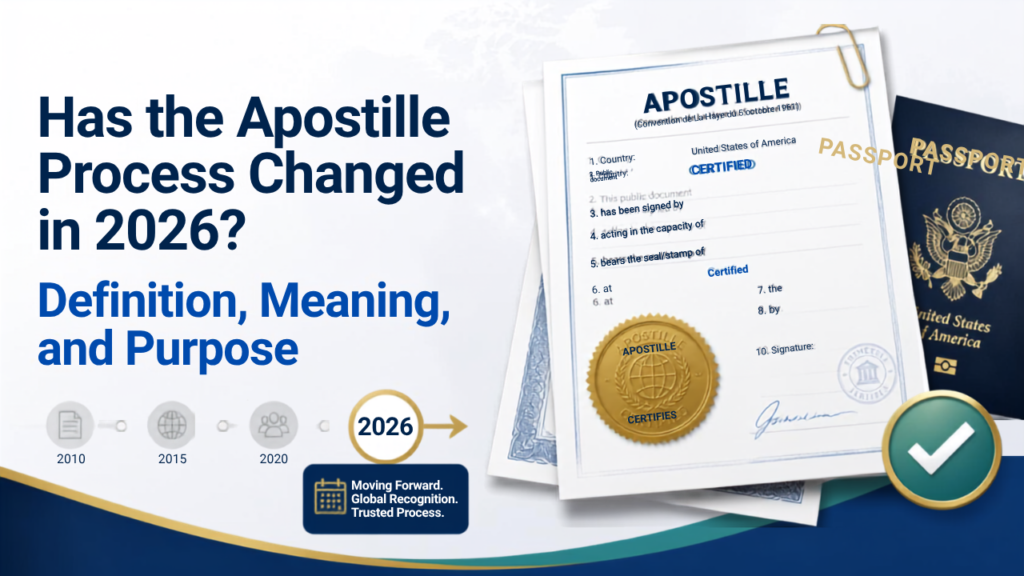
“Apostille” is one of those words you never hear until you need it — and then it seems to be everywhere. If you are preparing documents for use abroad, here is a clear, jargon-free explanation of what an apostille is, what it does, and why it matters in 2026.
The meaning
An apostille is a certificate that authenticates a public document for use in another country. It comes from the Hague Convention of 1961, which created a single, standardised way for member countries to accept each other’s documents. In India, the apostille takes the form of a small, numbered, computer-generated sticker applied by the Ministry of External Affairs (MEA).
What it looks like
A genuine MEA apostille is a square sticker — typically on the back of your original document — carrying a unique apostille number and standard fields. That number can be verified online through the e-Sanad portal, which is how a destination authority confirms it is real.
What it actually certifies (and what it doesn’t)
This is the part most people miss: an apostille certifies the signature and seal of the Indian authority that attested your document — not the truth of the document’s contents. When your HRD-attested degree is apostilled, the MEA is confirming that the HRD officer’s signature and seal are genuine, and the HRD has separately confirmed the university issued it. The apostille is a signature check layered on top of the verification that already happened.
A little history
India joined the Hague Apostille Convention in 2005. Since then, apostilled Indian documents have been accepted across a large and growing group of member countries — well over 120 today — without needing separate embassy legalisation.
Why it matters in 2026
- It is your document’s international passport for Hague member countries.
- It replaces a slow embassy legalisation chain with a single certificate.
- Its unique number makes fraud easier to detect and genuine documents easier to trust.
- With e-Sanad, eligible documents can now be apostilled digitally, making the process faster than ever.
At its heart, an apostille is a simple idea: one trusted stamp that lets your document be believed abroad. Know what it certifies, check that number on e-Sanad, and confirm your destination is a Hague member — and you understand everything that matters about it.
Quick FAQ
What is an apostille in one sentence?
A standardised certificate that authenticates a public document for use in another Hague Convention country.
Does an apostille verify my document’s contents?
No — it certifies the signature and seal of the authority that attested it, not the truth of the contents.
How can I check if an apostille is genuine?
Verify its unique number on India’s e-Sanad portal (esanad.nic.in).
How Manav Corporate Consultants can help
At Manav Corporate Consultants (MCC), we manage the complete attestation and apostille journey end to end — state verification, MEA, embassy legalisation and destination-country formalities — with doorstep document pick-up and drop across India. As an ISO 9001:2015-certified, MEA-licensed firm, we keep the process fast, transparent and hassle-free.
Mumbai – +91 7738980318 / Chennai – +91 96770 59423 / Pune – +91 9970466594 | info@manavconsultants.com | www.manavconsultants.com