
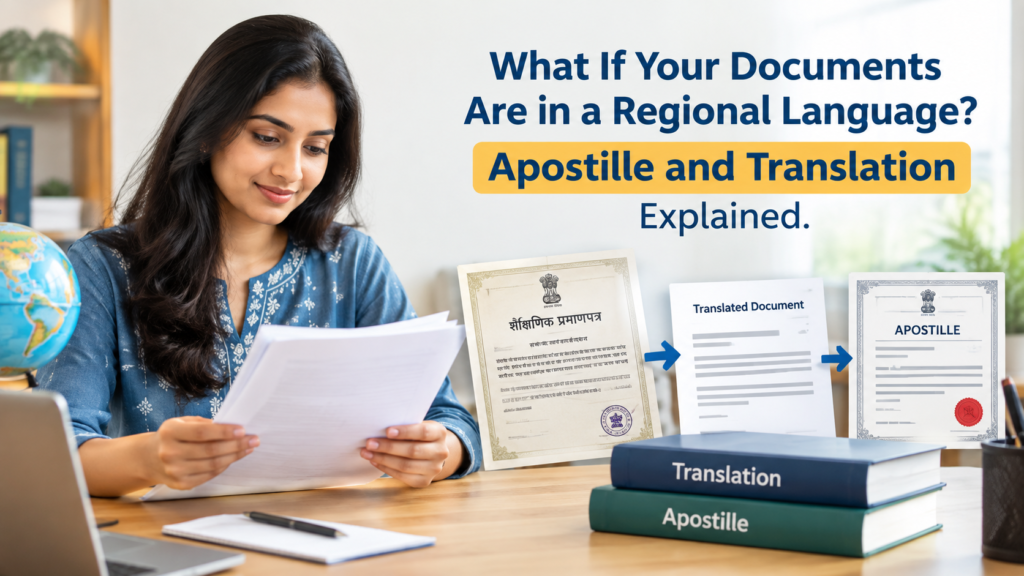
Many Indian certificates — birth, marriage, and some educational documents — are issued in a regional language such as Hindi, Tamil, Marathi or Bengali. When you need them abroad, language becomes an extra step alongside apostille. Here is how translation and apostille fit together.
Does a regional-language document need translation?
It depends on your destination. If the receiving country works in English (or accepts English), a regional-language document usually needs an accurate English translation. If the destination requires its own language — as several European countries do — you may need a translation into that language, sometimes by a certified or sworn translator.
Translation and apostille — which comes first?
Sequence matters. In many cases the original document is apostilled first, and then translated (so the apostille itself is covered by the translation). In others, a translated document is notarised and legalised. Because practice varies by destination and document, confirm the required order before you start — doing it in the wrong sequence can mean redoing the work.
Who should translate it?
- For English translations: a certified/professional translation is usually needed, often notarised.
- For destination-language translations: some countries insist on a sworn translator registered in that country (for example, Poland’s Ministry-of-Justice sworn translators).
Keep names consistent
Ensure the translation renders your name exactly as it appears on your passport — a transliteration difference can create the same mismatch problems as any other name discrepancy.
The practical approach
- Confirm whether your destination needs a translation, and into which language.
- Confirm the required order (apostille then translate, or translate then legalise).
- Use the right kind of translator (certified or sworn, as required).
- Check the translated names match your passport.
A regional-language document is no barrier to going abroad — it just adds a translation step. Confirm the language, the translator type and the correct sequence with apostille, and your document will be both readable and legally recognised at its destination.
Quick FAQ
Do regional-language documents need translation for apostille?
Often yes — into English, or into the destination’s language where required (sometimes by a sworn translator). It depends on the destination.
Do I apostille or translate first?
It varies by destination — sometimes apostille first then translate (so the apostille is covered), sometimes translate and legalise. Confirm the order before starting.
Who can translate my document?
A certified/professional translator for English (often notarised); some countries require a sworn translator registered in that country.
How Manav Corporate Consultants can help
At Manav Corporate Consultants (MCC), we handle the complete apostille and attestation journey — checking your documents for issues before submission, then managing notarisation, state and Chamber of Commerce verification, MEA apostille and embassy legalisation — with doorstep pick-up and drop across India, transparent pricing and genuine, online-verifiable results. As an ISO 9001:2015-certified, MEA-licensed firm, we help you get it right the first time, without the errors, hidden costs or delays that catch applicants out.
Mumbai – +91 7738980318 / Chennai – +91 96770 59423 / Pune – +91 9970466594 | info@manavconsultants.com | www.manavconsultants.com